Finding the right sunroom builders in Flour Bluff, TX means weighing two things most national cost guides skip entirely: coastal wind-load rules and realistic resale numbers. This guide breaks down sunroom types, 2026 pricing, the windstorm certification step that trips up a lot of homeowners, and what to check before you sign a contract.
What Kind of Sunroom Fits a Flour Bluff Property?
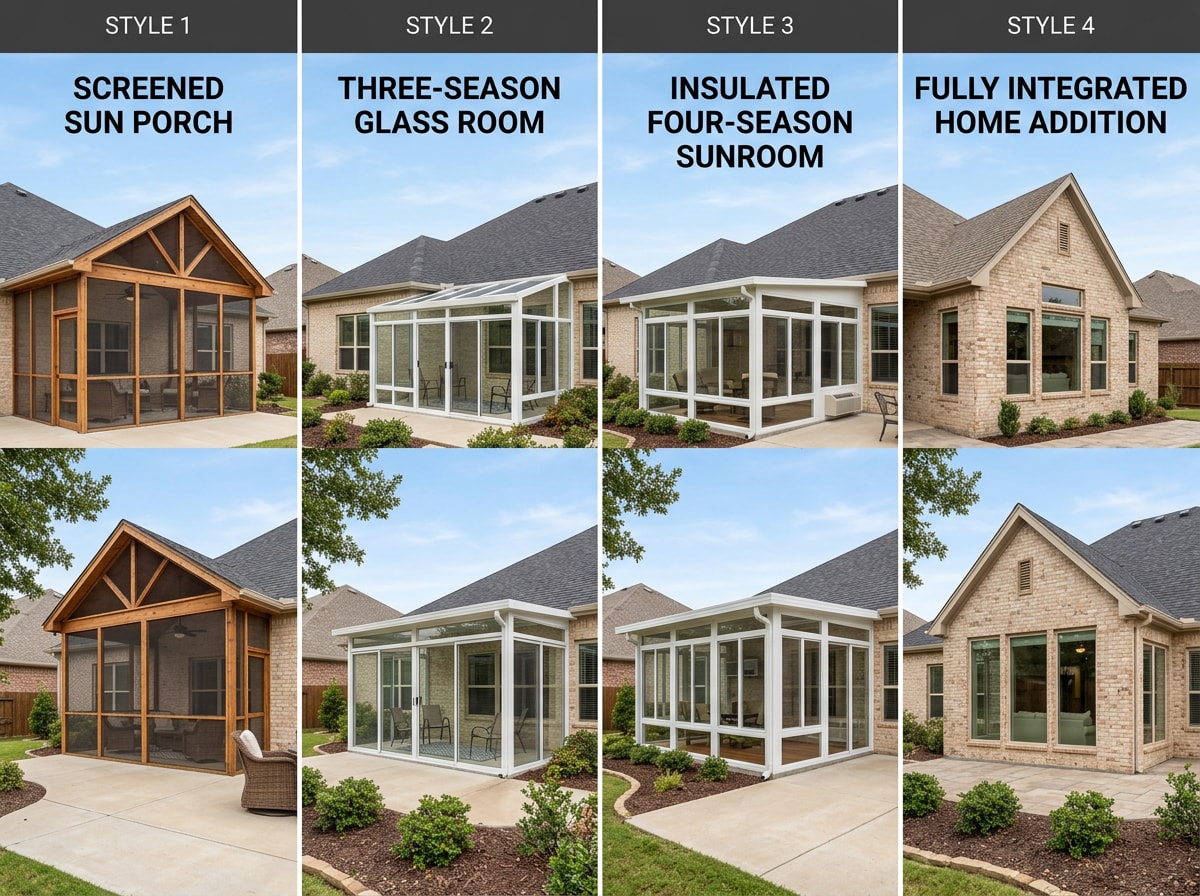
Your sunroom's cost, comfort, and resale value all trace back to one decision: which of four build types you choose. Square footage and finishes matter less than this choice.
Screen rooms and sun porches are the simplest option. Basic framing wrapped in screening, no insulation, no climate control. They keep bugs out and let in the Gulf breeze, but because they're not conditioned or fully enclosed, they add limited square footage value at resale.
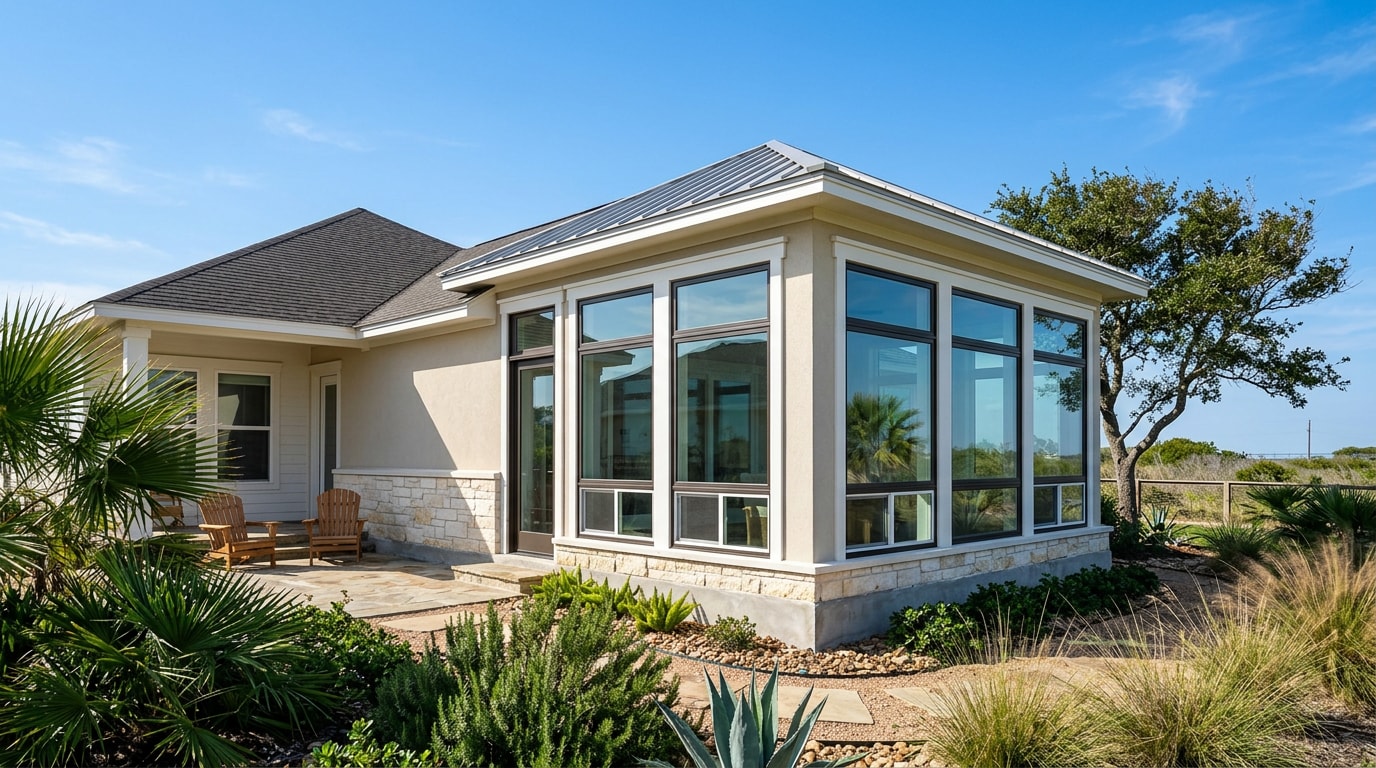
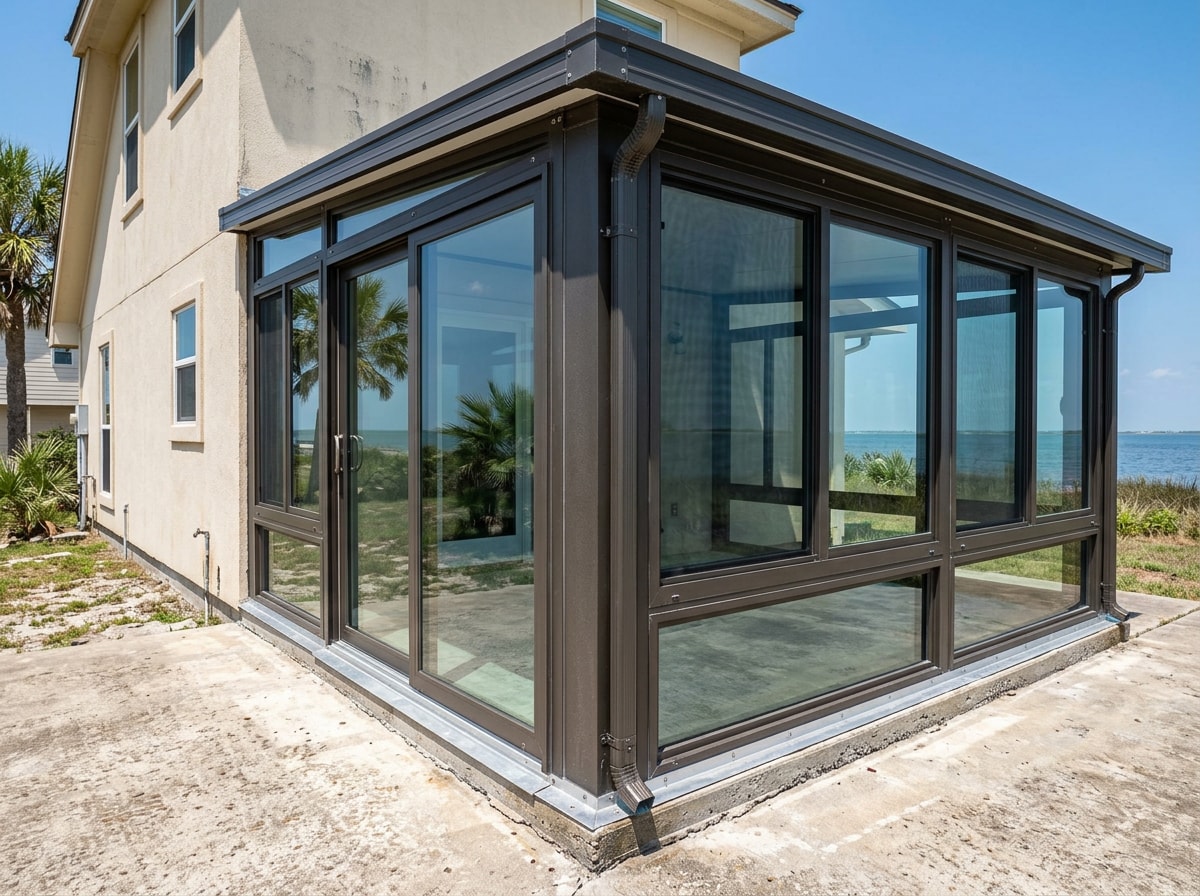
Three-season sunrooms use insulated glass and a vinyl or aluminum frame to handle wind and light rain without full HVAC. In Flour Bluff's mild coastal climate, "three-season" often stretches closer to year-round comfortable use since hard freezes are rare here.
Four-season sunrooms are insulated and tied into HVAC, usually through a mini-split or ducted extension. Because they're conditioned, these typically count as true living space for appraisal purposes rather than bonus square footage.
Full addition sunrooms go further still. They're architecturally integrated into the home with a matched roofline and load-bearing walls instead of a bolt-on structure. Appraisers generally treat these as genuine living space, which matters if resale value is part of your decision.
Flour Bluff's Wind Code Changes the Sunroom Conversation
This is the part most sunroom cost calculators never mention, and it's specific to where you live.
Flour Bluff sits on the Encinal Peninsula between Corpus Christi Bay and the Laguna Madre, inside the Texas Department of Insurance's designated windstorm catastrophe area. That designation matters because any new structure, addition, or repair here falls under the Texas windstorm inspection program, which requires structures to meet wind-pressure standards tied to the adopted building code for your zone.
For sunrooms specifically, the residential code includes a dedicated wind-design section for sunroom structures that sets different limitations depending on whether the room is conditioned or unconditioned. In practice, this means:
- Framing connections and anchoring need to be engineered for local wind pressures, not just "built strong."
- Glazing and fasteners typically need to be corrosion-resistant and wind-rated rather than standard inland-grade materials.
- If you plan to insure the structure through the Texas Windstorm Insurance Association, it likely needs a WPI-8 certificate of compliance before or shortly after construction.
A builder unfamiliar with this process can leave you with a sunroom that looks finished but can't be certified for windstorm coverage. If you want more detail on how this plays out for enclosed structures in this neighborhood, we cover it in our enclosed porches guide for Flour Bluff.
2026 Sunroom Cost in Flour Bluff and Corpus Christi
Local pricing tends to run toward the higher end of national ranges, largely because coastal-grade materials and engineered wind connections add cost that an inland build wouldn't carry.
| Sunroom Type | Typical 2026 Installed Cost | Cost per Sq. Ft. | What's Included |
|---|---|---|---|
| Screen room / sun porch | $8,000 – $20,000 | $70 – $150 | Framing, screening, roof, no insulation |
| Three-season room | $15,000 – $45,000 | $175 – $275 | Insulated glass, vinyl/aluminum frame, no HVAC |
| Four-season room | $45,000 – $80,000 | $200 – $300 | Full insulation, HVAC tie-in, upgraded glazing |
| Custom solarium / full addition | $80,000 – $150,000+ | $300+ | Architectural integration, premium materials, load-bearing walls |
National per-square-foot figures for three- and four-season rooms come from current 2026 remodeling cost data. Expect Flour Bluff bids to land toward the upper half of these ranges once wind-rated glazing, engineered anchoring, and WPI-8 inspection costs are factored in.
What Pushes a Quote Higher
- A new foundation instead of building on existing concrete
- Impact-rated, wind-certified windows and doors
- Added HVAC capacity for a four-season build
- A new or extended roofline tied into the existing structure
- Premium flooring or custom millwork
Ways to Bring the Cost Down Without Cutting Corners
- Build on an existing concrete patio slab instead of pouring new
- Choose a mini-split system instead of extending ductwork
- Design a three-season room with future four-season conversion in mind (larger footers, wiring stubbed in now)
- Compare at least two quotes that each explicitly include windstorm engineering and WPI-8 coordination, so you're comparing like-for-like scope
Request a free sunroom estimate to see where your specific project lands once your lot, roofline, and finish level are factored in.
Sunroom ROI: What the Data Actually Supports
Be skeptical of any guide that hands you a precise resale percentage for "a sunroom." The Remodeling Cost vs. Value Report, the industry's most cited benchmark, tracks about 23 specific projects nationally and doesn't break out sunrooms as a standalone category.
What it does track is useful as a proxy. Vinyl window replacement, a glazing-heavy project similar in scope to sunroom glass, recoups roughly 75% of its cost nationally in 2026 data. Across remodeling projects broadly, the average recoups somewhere in the 60% to 70% range at resale.
A few things tend to push a sunroom toward the stronger end of that range:
- It's fully conditioned and counted as living space, not a seasonal bonus room
- It's permitted and windstorm-compliant, which matters to buyers' lenders and insurers in a TWIA zone
- It's architecturally integrated rather than looking like a bolt-on addition
A sunroom built without proper permits or wind certification can actually complicate a sale here, since buyers financing through a mortgage in a coastal windstorm zone will often need the structure to carry a valid WPI-8 before their insurer will cover it.
Permits and Realistic Timelines
Every sunroom addition in Corpus Christi, including Flour Bluff, requires a building permit through the city's Development Services Department. Four-season rooms typically need additional electrical and mechanical permits layered on top of the structural one.
Most sunroom projects run 6 to 12 weeks total once you include design, permitting, and construction. Permitting alone can take two to four weeks in this area, so build that into your overall project timeline before you commit to a move-in date.
If your project involves new window or door openings into the main house, it's worth reviewing window replacement options and checking the ENERGY STAR performance criteria for glazing, since efficiency ratings affect both comfort and long-term energy cost in a four-season build.
How to Vet a Sunroom Builder in Flour Bluff
Low bids are easy to find. A builder who understands coastal wind code is not. Before signing anything, confirm:
- Licensing and insurance are current and verifiable, not just claimed
- Windstorm experience, specifically whether they've coordinated a WPI-8 inspection before, not just built a roof
- Material specs call out corrosion-resistant fasteners and wind-rated glazing by name, not generic "quality materials" language
- A local portfolio of sunrooms or additions actually built in Flour Bluff, Corpus Christi, or similar exposed coastal areas
- Written warranty terms that specify what's covered and for how long
- Permit handling is included in their scope, not left for you to navigate alone
A contractor who can speak specifically to any of this without prompting has likely done it before. One who can't should at least be asked directly how they plan to handle windstorm certification.
Our team works across the Flour Bluff, TX area and the broader Corpus Christi Bay region, and we walk every addition project through the local permitting and windstorm process as part of the scope. Get a free estimate to start that conversation with specifics for your property.
FAQ
Do you need a permit for a sunroom addition in Flour Bluff, TX?
Yes. Every jurisdiction in Corpus Christi, including Flour Bluff, requires a building permit for a sunroom addition. Four-season rooms typically need additional electrical and HVAC permits layered on top of the structural one. Check the City of Corpus Christi Development Services permitting page for current requirements before scheduling construction.
Does a sunroom need wind or hurricane certification in Flour Bluff?
If you want the structure covered by Texas Windstorm Insurance Association coverage, yes. Flour Bluff sits inside the TDI-designated windstorm catastrophe area, so new additions generally need to meet wind-pressure standards under the adopted residential code and may require a WPI-8 certificate of compliance. Confirm this directly with your builder and the Texas Department of Insurance windstorm program before construction starts.
Does a sunroom add value to a home in Texas?
A well-built, permitted, conditioned sunroom generally adds more resale value than an unpermitted or purely seasonal one. National data shows glazing-heavy projects like window replacement recoup around 75% of cost, and overall remodeling projects average 60% to 70%. There's no sunroom-specific line item in the industry's main Cost vs. Value tracking, so treat these as directional benchmarks, not a guarantee.
What's the difference between a sunroom and a covered patio?
A covered patio is open-air or screened at most, with no insulation and minimal permitting beyond a roof structure. A sunroom uses full windows or walls, often insulation, and requires more extensive permitting since it adds enclosed, and sometimes conditioned, square footage. A screened porch follows the same logic: screening alone doesn't make a space a sunroom.
How much does a four-season sunroom cost?
A four-season sunroom typically runs $200 to $300 per square foot once insulation, HVAC integration, and upgraded glazing are factored in, putting a 200-square-foot room in roughly the $40,000 to $60,000 range before any coastal wind-rating premium.
How long does it take to build a sunroom?
Most sunroom projects take 6 to 12 weeks total once design, permitting, and construction are included. Permitting alone can take two to four weeks in this area, so build that into your overall timeline before setting a completion date.
---
About the Author: This guide was written by the team at Revitalizing Renovations, a remodeling and construction company serving the Corpus Christi Bay area. Our project managers have coordinated additions and enclosed-space projects across Flour Bluff, Portland, and Calallen, including the permitting and windstorm-compliance steps that are specific to this coastline. Have a question about your property? Contact our team for a free estimate.