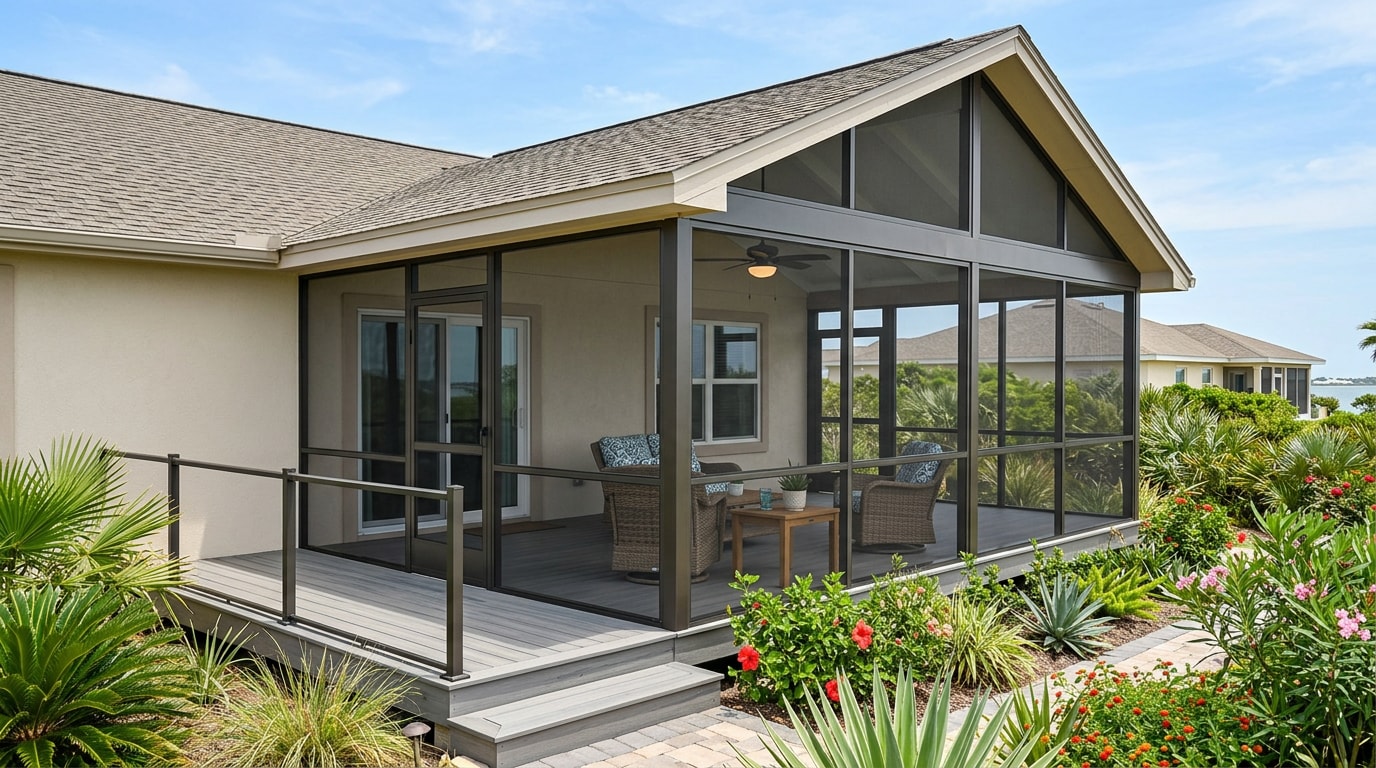
Enclosed porches in Flour Bluff, TX solve three problems at once: mosquitoes off the Laguna Madre, salt air that eats unprotected wood, and sun that makes an open patio unusable by June. Before you call a contractor, you need straight answers on what it costs, which enclosure type fits a coastal lot, and what Nueces County's windstorm rules actually require. Here's what twelve years of building in this exact climate has taught us.
How Much Do Enclosed Porches Cost in Flour Bluff, TX in 2026?
Cost depends almost entirely on which of three projects you're actually asking about. People say "enclosed porch" for a $2,500 screen kit and a $40,000 sunroom alike, and the price difference is enormous.
| Project Scope | Typical 2026 Cost Range | What's Included |
|---|---|---|
| Screen an existing covered porch | $10–$25 per sq. ft. ($2,000–$5,000 typical) | Aluminum or fiberglass screen panels, screen doors, minor frame repair |
| New screened porch, built from scratch | $50–$175 per sq. ft. ($10,000–$35,000 typical) | Slab or deck, roof tie-in, framing, screen system, electrical |
| Insulated sunroom / four-season conversion | $200–$500 per sq. ft. | Insulated glazing, HVAC extension, electrical, finished interior walls |
A typical 200-square-foot porch lands at the low end if you're only adding screens to a structure that already has a roof and slab. It climbs fast once you're pouring new concrete, tying into the roofline, or adding glass and conditioning.
Square footage, material grade, and whether hurricane-rated screening or impact glazing is specified all move the number. Permits and the windstorm inspection covered below add a few hundred dollars but are not optional in this zip code.
Want a number specific to your house instead of a range? Get a free estimate and we'll walk the site before you commit to a design.
Screened Porch vs. Sunroom: Which Fits Flour Bluff's Climate?
This is the real decision, and it comes down to how you'll use the space.
- Screened porch: Open-air feel, mesh walls, no climate control. Good for bug protection and shade, but it's a three-season space here — August afternoons are rough even in the shade.
- Sunroom / four-season room: Insulated glass, can tie into your HVAC, usable year-round including during Gulf humidity spikes. Costs roughly double a comparable screened porch but earns that back in actual days of use per year.
If you already have a covered patio and just want relief from no-see-ums and wasps, a screen enclosure is the faster, cheaper path. If you want a room you'll actually sit in during July, budget for the sunroom. We cover this same tradeoff in more depth in our porch conversion guide for Portland, TX, which applies just as well to Flour Bluff lots.
Why Coastal Homeowners in Flour Bluff Enclose Their Porches
Flour Bluff sits on the Encinal Peninsula between Corpus Christi Bay, Oso Bay, and the Laguna Madre, so every outdoor surface deals with salt spray, humidity, and biting insects almost year-round.
- Bug protection — mosquitoes and no-see-ums off the Laguna Madre make an unscreened patio unusable at dusk much of the year.
- Heat relief — a shaded, airflow-friendly enclosure stays usable later into the afternoon than open concrete.
- Material longevity — salt-laden air corrodes unprotected fasteners and degrades untreated wood far faster than inland locations.
- Real living space — an enclosed porch adds square footage you'll actually use, not a patio you avoid by July.
Wind Code and Windstorm Certification: What Nueces County Homeowners Need to Know
This is the part most national porch guides skip entirely, and it's the single biggest difference between building here and building fifty miles inland.
Nueces County is one of the Texas Department of Insurance's designated First Tier coastal catastrophe counties. That means any new construction, addition, or alteration, including a porch enclosure, generally needs a Windstorm Certificate of Compliance (commonly called a WPI-8) before it's eligible for coverage through the Texas Windstorm Insurance Association. Skip this step and you may find your new enclosure uninsurable, which becomes a problem the moment you try to sell or refinance.
Screen enclosures also have their own engineering requirements under the building code. The International Residential Code's Appendix BF sets minimum design wind loads for aluminum screen enclosures specifically in hurricane-prone regions, scaled to the local design wind speed and exposure category. A contractor who doesn't know these tables by heart shouldn't be quoting your job.
In twelve-plus years building across Flour Bluff and the Coastal Bend, we've walked more homeowners through WPI-8 paperwork than we can count. It's the step people forget about until their insurance agent asks for it during a claim or a sale.
Materials That Hold Up to Salt Air and Humidity
Material choice matters more here than almost anywhere inland.
| Material | Best For | Coastal Durability |
|---|---|---|
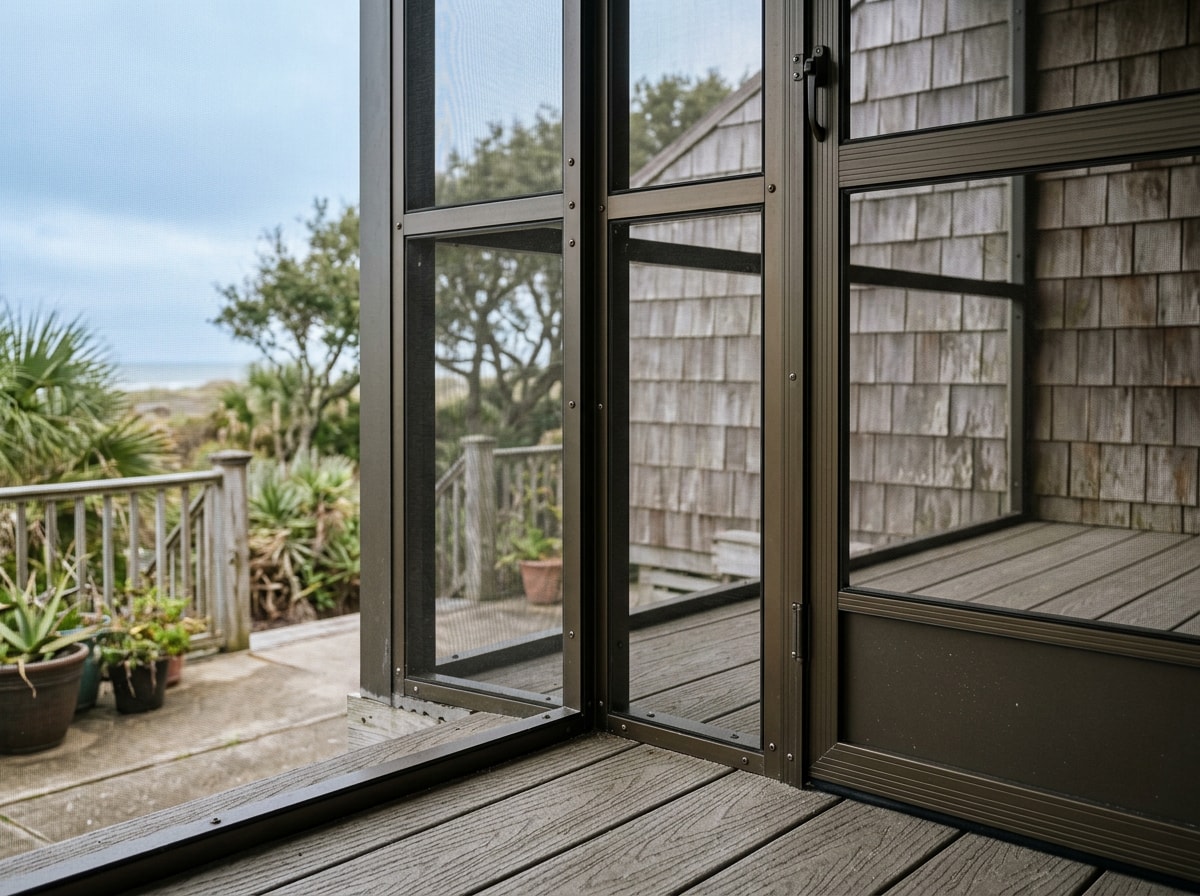
| Aluminum framing | Screen panels, structural posts | High rust resistance, low maintenance |
| Fiberglass or PVC-coated mesh | Standard screening | Resists corrosion better than galvanized steel mesh |
| Composite decking | Porch flooring | Won't rot or splinter in humid, salty conditions |
| Insulated glass (sunrooms) | Year-round conditioning | Performance depends on U-factor and SHGC rating |
Wood looks great but demands far more upkeep near the water. Pressure-treated lumber and regular refinishing through our exterior painting services can extend its life, but aluminum and composite trade a little warmth for genuinely lower long-term maintenance.
If you're building a glazed sunroom instead of a screen room, glazing performance matters. ENERGY STAR's South-Central climate zone criteria call for a window U-factor of 0.28 or lower and a solar heat gain coefficient of 0.23 or lower, which keeps summer heat gain in check without over-insulating against a winter that rarely gets cold enough to matter here.
Can You Convert an Existing Porch Into a Screened or Insulated Enclosure?
In most cases, yes. If your porch already has a sound roof, structurally adequate posts, and a slab or deck that isn't sagging, screen panels or a framed enclosure can go on without a full rebuild.
Conversion gets more complex, and pricier, if any of the following show up during inspection:
- Sagging or undersized roof framing that can't carry added structural load
- A slab or foundation with settlement cracks or drainage problems
- An older structure that predates current windstorm code and was never WPI-8 certified
An honest assessment before signing a contract avoids surprises once demolition starts. For context on what full remodeling projects look like in this neighborhood, our building companies near me guide for Flour Bluff walks through how local contractors scope similar work.
What the Enclosure Process Looks Like
A straightforward Flour Bluff porch enclosure generally runs through these stages:
- Site assessment — check framing, slab condition, and whether a prior WPI-8 exists on file.
- Design and material selection — screen vs. sunroom, aluminum vs. wood trim, flooring choice.
- Permitting and windstorm application — filed before work starts, not after.
- Framing and structural tie-in — connecting the enclosure to the existing roofline.
- Screen, glazing, or window installation — our window installation team handles sunroom glazing when the scope calls for it.
- Doors and trim — including any new exterior door installation for the porch entry.
- Final inspection and WPI-8 issuance.
Visit our homepage to see the full range of remodeling work we handle across Corpus Christi, Flour Bluff, Portland, and Calallen, or check our Flour Bluff service area page for neighborhood-specific project examples.
FAQ
Do I need a permit or windstorm certificate for an enclosed porch in Flour Bluff?
Almost always, yes. Nueces County is a designated coastal catastrophe county, so new construction, additions, and alterations generally require a WPI-8 Windstorm Certificate of Compliance to remain eligible for wind and hail coverage through TWIA, in addition to your standard city building permit.
What's the best time of year to build an enclosed porch here?
Scheduling outside the heart of Atlantic hurricane season, which officially runs June 1 through November 30, usually means faster permitting, better material availability, and less risk of weather delays mid-project.
Is a screened porch cheaper than a sunroom?
Yes, typically by about half. A screened porch skips glass walls, insulation, and HVAC extension, which are the most expensive parts of a comparable sunroom build.
Does an enclosed porch add value to my home?
It generally does, since it adds usable living or entertaining square footage that coastal buyers specifically look for. The return varies by neighborhood and finish level, so a licensed appraiser or local agent can give you a number specific to your street.
Can I winterize my screened porch with plexiglass?
Yes. Plexiglass or vinyl panel kits offer a seasonal, lower-cost way to extend porch use into cooler months without committing to a full sunroom conversion.
What kind of flooring works best on a screened-in porch?
Composite decking, tile, and stained concrete all hold up well in a humid coastal climate. Our flooring installation team can walk you through which option fits your porch's drainage and sun exposure.