Warehouse contractors in Calallen, TX work under a different rulebook than typical commercial builders. Nueces County sits inside Texas's windstorm catastrophe zone, so every tilt-wall panel and steel frame has to clear a coastal inspection before it's insurable. Here's what that actually costs in 2026, what code compliance really involves, and exactly what to check before you sign a contract.
What "Warehouse Contractor" Actually Covers in Calallen
Not every commercial builder handles warehouse work the same way. The scope usually falls into three buckets:
- Shell construction - the structural building only: foundation, walls, roof, and dry-in. No interior finish.
- Shell plus office/amenity build-out - the structure plus finished office space, break rooms, and restrooms inside the warehouse footprint.
- Tenant improvement (TI) - finishing out an existing warehouse shell for a new occupant's specific operations.
Most Calallen-area projects need a contractor who can at least coordinate the second or third category, since few warehouses go up without some finished office or employee space inside them.
Warehouse Construction Costs in Calallen, TX (2026)
Cost estimates for warehouse construction vary a lot depending on which source you check, building type, and finish level. As a general range, basic pre-engineered steel shells tend to run toward the lower end nationally, while tilt-wall construction with office build-out and full MEP systems runs considerably higher. Treat any number below as a planning range, not a quote.
| Project Type | Typical Scope | Relative Cost |
|---|---|---|
| Basic PEMB shell | Steel frame, roof, no interior finish | Lowest |
| Tilt-wall shell | Concrete panel walls, higher fire/wind resistance | Mid |
| Shell + office build-out | Structure plus finished office, restrooms | Mid-high |
| Cold storage / specialty | Insulated panels, refrigeration systems | Highest |
Because the spread between sources is wide, get at least three bids from contractors who've pulled permits in Nueces County before. A local bid will reflect actual site conditions, soil reports, and current material pricing far better than any national average.
Coastal Codes: Windstorm Certification Nobody Can Skip
This is the part of warehouse construction that trips up out-of-area contractors, and it's the single most important thing to understand before hiring.
Nueces County is one of the 14 first-tier coastal counties the Texas Department of Insurance designates as a catastrophe area. That means most new warehouse construction, additions, and major alterations need a WPI-8 windstorm certificate of compliance before the building can be insured through the Texas Windstorm Insurance Association. The certification isn't optional paperwork filed at the end. It's tied to specific inspection stages during construction, and a Texas-licensed engineer or TDI-appointed inspector has to sign off before the next phase proceeds.
Here's the detail most contractor websites gloss over: if a scheduled windstorm inspection gets missed, say, the framing inspection before insulation and exterior cladding go on, there's no way to "catch it up later" without opening the wall back up for the inspector to verify compliance. That can mean weeks of schedule slip and real demo cost on a project that otherwise looked complete. Ask any contractor you're vetting how they sequence windstorm inspections into the build schedule, not just whether they "handle" windstorm compliance.
The Texas Department of Insurance maintains the official rules and a certificate lookup tool on its windstorm inspection program page. Building departments in the region also reference model code provisions maintained by the International Code Council when reviewing structural, wind-load, and clear-height requirements.
Tilt-Wall vs. Pre-Engineered Metal Buildings: Which Fits Calallen Sites
Two structural approaches dominate warehouse projects in this part of South Texas.
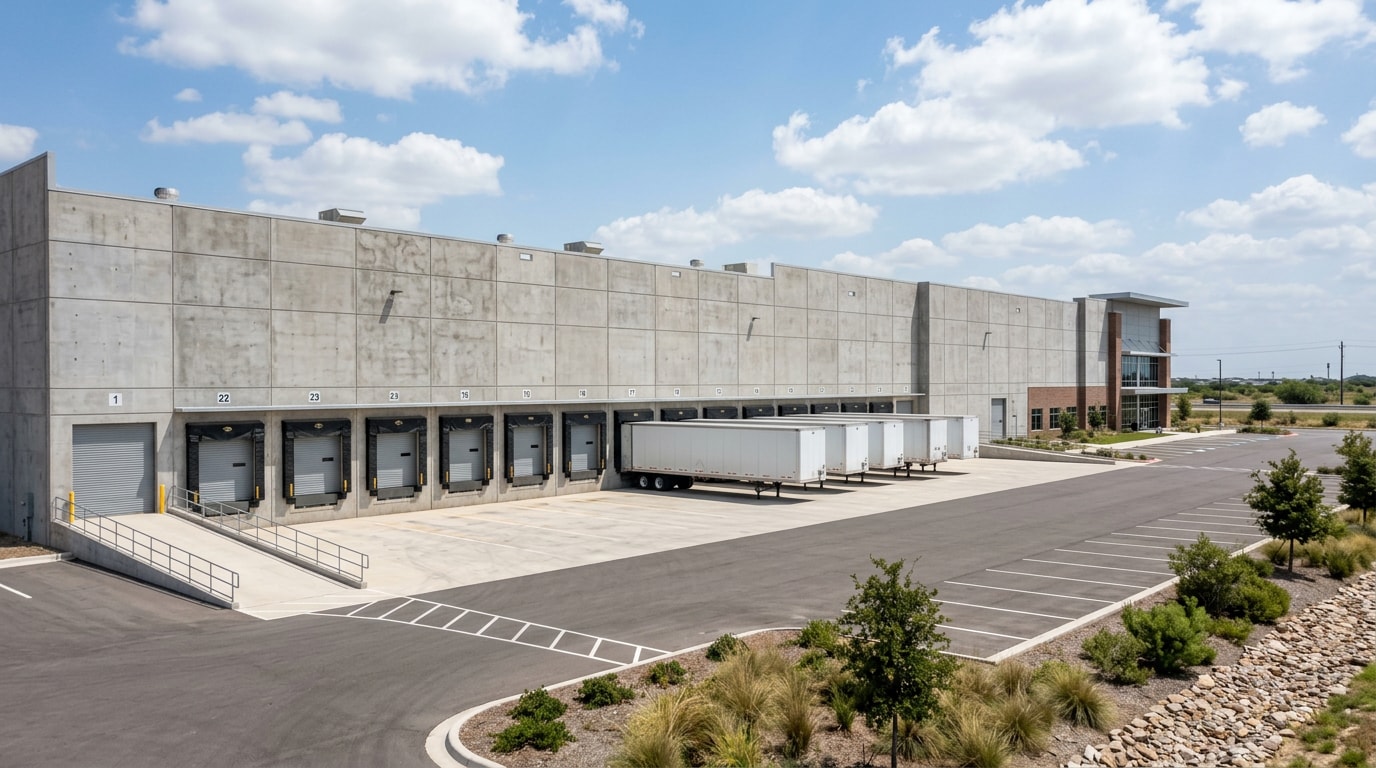
Tilt-wall construction pours concrete panels on-site and lifts them into place with a crane. It's slower to mobilize and costs more upfront, but it holds up well against coastal wind and offers flexible clear heights for large distribution space.
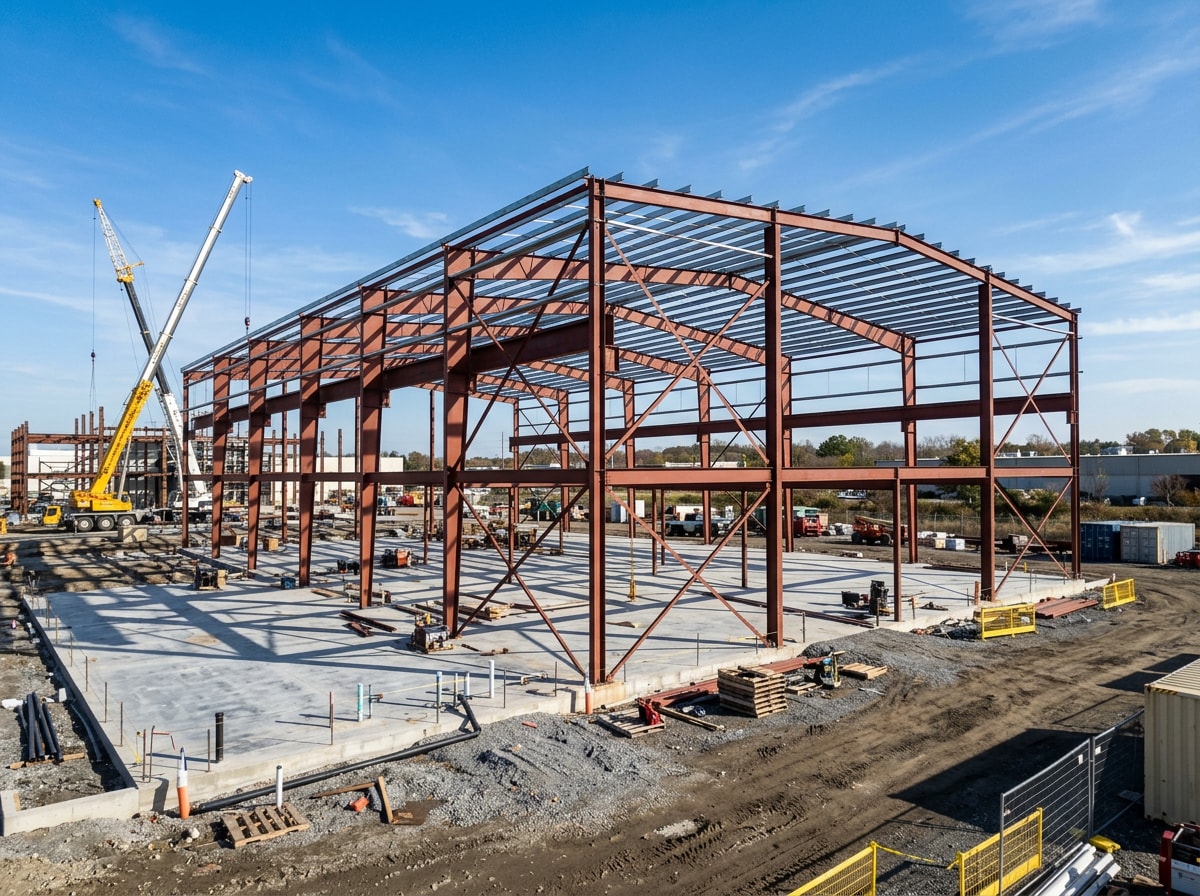
Pre-engineered metal buildings (PEMB) use prefabricated steel framing shipped to the site, which generally shortens the construction timeline. It's a common choice for smaller warehouses or projects that need faster occupancy, and it still has to meet the same windstorm design requirements as tilt-wall in Nueces County.
Neither approach is automatically "better." The right call depends on your clear-height needs, timeline, and whether you're building speculative shell space or a facility designed around a specific tenant's equipment.
How to Vet a Warehouse Contractor Before You Sign
Skip the glossy portfolio for a minute and check these first:
- Active Texas business registration and a physical address you can verify, not just a service-area listing.
- Current general liability and workers' comp insurance, confirmed directly with the carrier, not just a certificate PDF.
- Permit history in Nueces County or the City of Corpus Christi Development Services Department, since that shows real experience with local plan review and windstorm inspection scheduling.
- A named engineer or appointed qualified inspector they routinely work with for WPI-8 inspections, not a vague "we'll figure it out."
- References from recent commercial or industrial clients, not residential remodels. Ask specifically about change orders and whether the original timeline held.
- License verification, which you can run yourself through the Texas Department of Licensing and Regulation's search tool for any trade license involved in the project.
If your warehouse will have any staffed operations, also confirm the contractor designs dock areas, aisle widths, and equipment layouts with OSHA's warehousing safety guidance in mind. Fixing a dock clearance or guardrail issue after occupancy is far more expensive than designing it correctly the first time.
Typical Warehouse Construction Timeline
Most ground-up warehouse projects in this market run three to six months from site prep to turnover, though size and site conditions shift that window.
- Site grading, drainage planning, and soil testing
- Foundation and reinforced concrete floor slab, rated for the intended load
- Wall system installation (tilt-wall panels or PEMB framing)
- Roof framing, insulation, and windstorm-stage inspections
- Rough-in for electrical, fire suppression, and mechanical systems
- Interior build-out: office space, restrooms, break areas
- Final windstorm certificate of compliance and city sign-off
Finishing the Office and Amenity Space
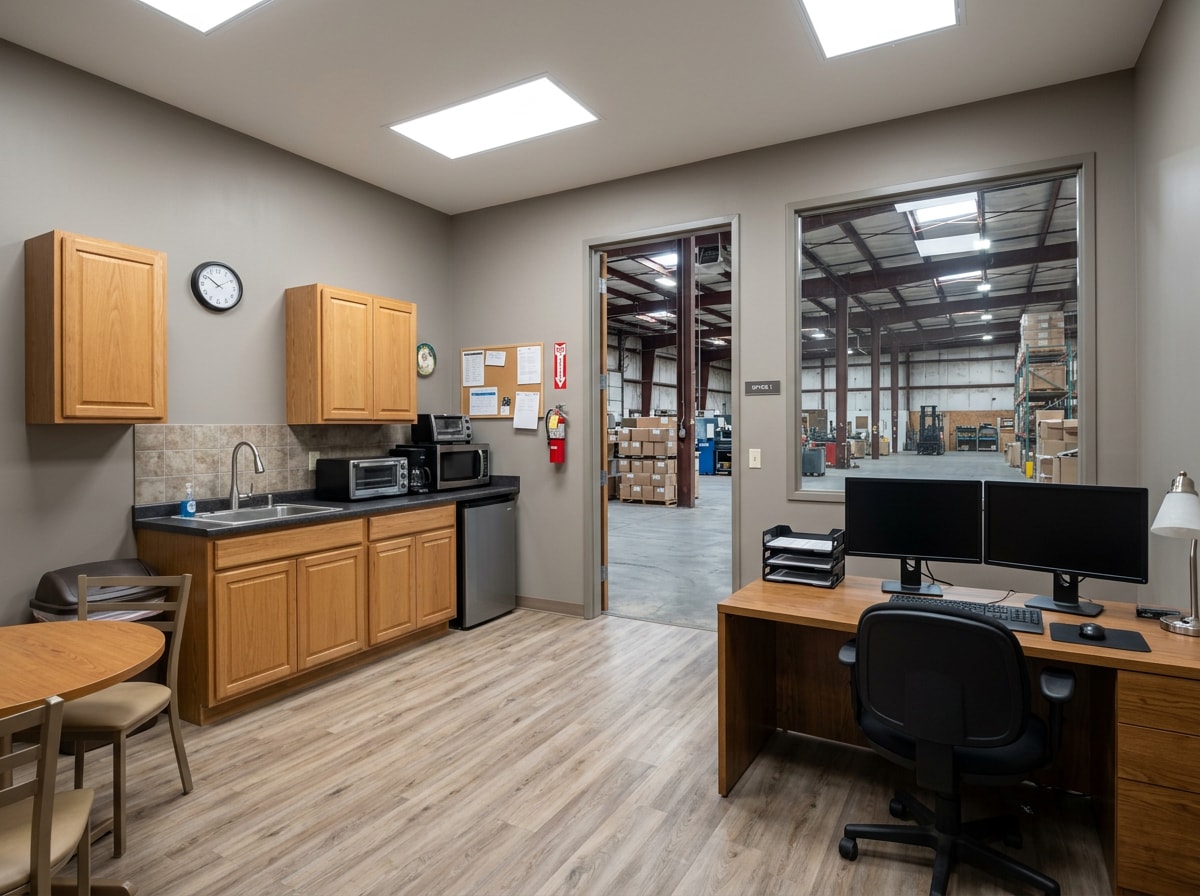
Here's where a lot of warehouse projects stall out after the shell is done: the office, restroom, and break room inside the building still need the same finish trades as any commercial interior.
In our own finish-out work on commercial and light-industrial spaces around Corpus Christi and Calallen, we've seen flooring and paint specs fail early when installers skip moisture testing on a tilt-wall slab, concrete tilt panels hold moisture differently than wood-framed construction, and the wrong flooring adhesive will lift within a year. That's a detail worth asking your general contractor about directly, especially if the office build-out is happening on the same slab as the warehouse floor.
If your project needs that interior finish work, Revitalizing Renovations handles the trades that turn a warehouse shell's office and amenity space into usable rooms: flooring installation, interior painting, window installation, and bathroom remodeling for employee restrooms. For a break room build-out, cabinet installation is a common add-on once the shell is dried in.
We serve Calallen, TX directly along with the broader Corpus Christi area. If you're weighing general contracting options for a larger commercial project, our guide to management contracting construction in Corpus Christi breaks down how that delivery method differs from a standard general contractor relationship.
Ready to scope the finish-out portion of your project? Get a free estimate and we'll walk the space with you before the shell crews are even off-site.
FAQ
Do I need a permit to build or remodel a warehouse in Calallen, TX?
Yes. New construction and alterations affecting structural, electrical, plumbing, or mechanical systems generally require permits through the City of Corpus Christi Development Services Department, which covers Calallen.
Does my warehouse need a windstorm inspection in Nueces County?
In most cases, yes. Nueces County is in the Texas Department of Insurance's designated catastrophe area, so new structures, additions, and alterations generally need a WPI-8 windstorm inspection and certificate to qualify for coverage through the Texas Windstorm Insurance Association. Confirm the specifics with your insurance provider before design begins.
What's the difference between tilt-wall and pre-engineered metal building construction?
Tilt-wall pours concrete panels on-site and lifts them into place, producing a durable shell with flexible clear heights. PEMB uses prefabricated steel framing shipped to the site, which generally shortens construction time. Both have to meet the same coastal wind-load requirements in Nueces County.
How long does warehouse construction take in Calallen, TX?
Most ground-up projects run three to six months from site preparation to final turnover. Site conditions, building size, and permitting timelines can push that window in either direction.
Can a warehouse contractor also finish the office or restroom space inside the building?
Some general contractors handle both the shell and the interior build-out. Others hand off flooring, painting, cabinetry, and door/window work to specialty finish contractors once the space is dried in. Either way, confirm who's responsible for that scope before signing.
How much does warehouse construction cost per square foot in Texas?
Cost estimates vary widely by source, building type, and finish level, with basic steel shells landing lower and tilt-wall construction with office build-out running higher. Get a site-specific bid rather than relying on a national average, since soil conditions, windstorm engineering, and material pricing all affect the final number.